

Modern responsible-gambling tools work in two layers. They include limits and time controls you set yourself, plus behind-the-scenes monitoring the operator runs. Knowing which is which lets you use these tools effectively. The first layer puts you in charge of your budget and clock; the second catches patterns you might not notice in yourself. Both layers serve essential functions.
Essential Responsible Gambling Features
The tools that protect players best are the ones that are easy to find and plainly explained. If a safety feature is buried three menus deep or written in confusing legalese, it might as well not exist. In my experience, the platforms that treat responsible gambling as a core part of the account dashboard rather than an afterthought are the ones where these tools actually get used.
Deposit and Loss Limits
Financial controls form the foundation of responsible gambling. You can set daily, weekly, or monthly caps on what you deposit. Most platforms let you run several at once. The system enforces whichever limit you hit first.
- Daily deposit limits — prevent impulsive large deposits
- Weekly spending caps — help manage medium-term budgets
- Monthly loss limits — protect long-term financial health
- Cooling-off periods — mandatory waiting times for limit increases
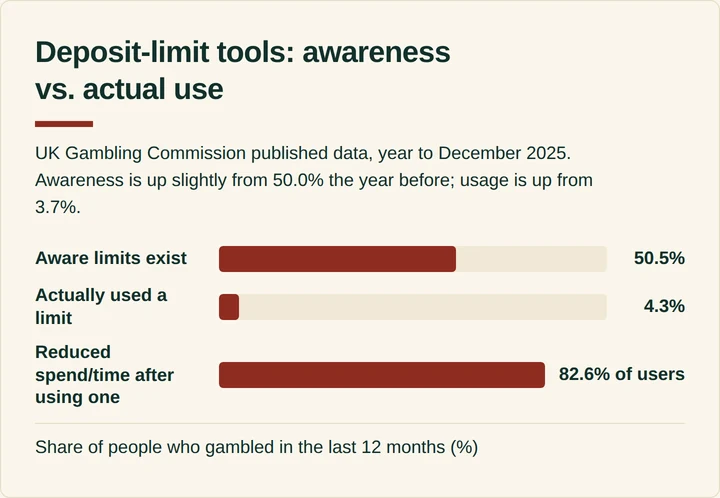
Data from the UK Gambling Commission shows how often these tools actually get used. In December 2025, 50.5% of people who had recently gambled were aware that spend, loss, and deposit limits existed. That awareness was up slightly from 50.0% the year before. Only 4.3% had actually used such a tool, up from 3.7%. Among those who did use a management tool, roughly 82.6% reported reducing their gambling time or spending as a result.
That awareness-versus-usage gap tells me the tools work when people try them. The challenge is getting more people past the first step. When I set a weekly deposit limit on a platform, the cooling-off period before I could raise it gave me time to reconsider a decision made in the heat of the moment. That pause stops impulsive increases.
Time Management Tools
Session time tracking keeps you aware of how long you’ve been playing. Time passes faster than it feels during play, so reality checks at regular intervals display your session stats and spending.
Key time management features include:
- Session reminders every 30, 60, or 90 minutes
- Automatic logout after specified periods
- Daily play time limits
- Activity history tracking across all sessions
Session duration and time-of-day play are now officially recognized as risk markers. Regulators and standards bodies have started formalizing which behaviours operators should watch for. How long you play and when you play are both on that list. That matters because operators now are expected to offer and monitor time tracking consistently.
Self-Exclusion Programs
Self-exclusion provides the strongest protection for players who need a complete break. In Manitoba, the program covers both land-based venues and online platforms. Enrollment is handled directly through Manitoba Liquor & Lotteries. The enrollment process is straightforward, with additional verification steps required for reversal.
| Exclusion Type | Duration | Reversal Process |
| Temporary | 24 hours – 6 months | Automatic expiration |
| Extended | 6 months – 5 years | Written request with waiting period |
| Permanent | Indefinite | Complex verification required |
The tiered structure makes sense to me. A temporary break might be enough if you’ve had a rough week and need to step back. The extended option suits someone who knows they need a longer reset. Permanent exclusion is the serious commitment. The complex verification required to reverse it prevents a moment of weakness from undoing a considered decision.
How AI Enhances Player Protection
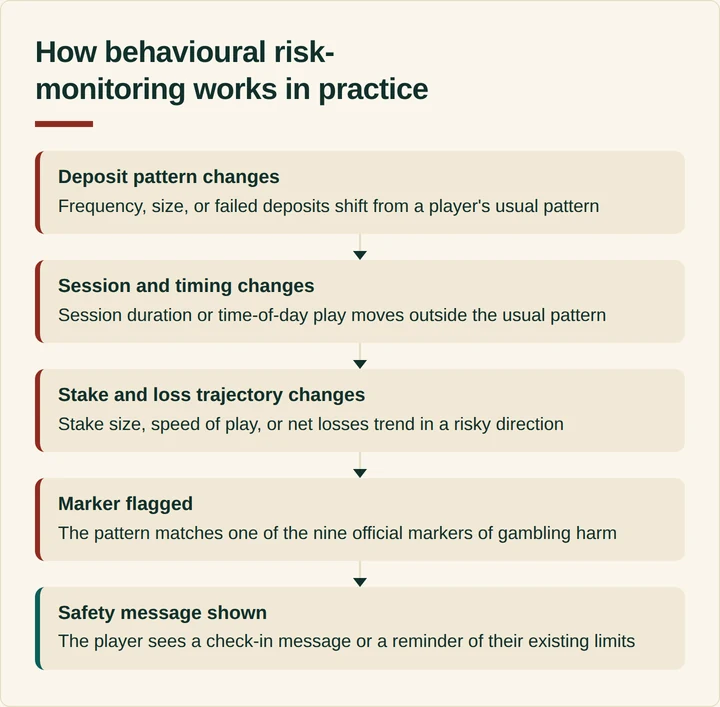
Behind the scenes, operators increasingly use behavioural monitoring to flag players who might be heading toward harm. The formal grounding for this work took a significant step forward in October 2025, when the European Committee for Standardisation approved a European standard on markers of gambling harm. The European Gaming and Betting Association first proposed this standard back in 2022. The standard defines nine specific behavioural markers operators can use to identify risky play.
The nine markers track financial activity and behavioral patterns. They cover stake volume and frequency changes, the speed and intensity of play, and deposit patterns including failed deposits. Regulators also expect monitoring of withdrawal behaviour, player-initiated contact, and session duration. Additionally, they track when players use multiple products, net losses or loss trajectories, and changes to how a player uses safety tools like limits or self-exclusion.
AI monitoring tracks:
- Frequency and timing of deposits
- Session duration changes
- Win/loss patterns indicating chase behaviour
- Deviation from established playing patterns
What I find valuable about this standard is that it gives operators a shared vocabulary for risk. The standard provides a recognized list of signals that indicate a player might need a check-in. Operators now have shared criteria for identifying at-risk players. The system works invisibly in the background, and when it flags something, the response is typically a gentle message showing your session stats or a reminder that your deposit limit is in place. These timely alerts stayed focused on facts I could act on.
Making Tools Work for You
Having responsible gambling tools available isn’t enough — the awareness-to-usage gap already described above makes that clear. Closing that gap takes two things: making the tools visible without being preachy, and pairing the technical features with education about why they matter.
Beyond the account settings, look for operators that provide educational resources and clear pathways to support. In Manitoba, the Gambling Helpline at 1-800-463-1554 is free, confidential, and available around the clock. The Addictions Foundation of Manitoba offers free counselling for problem gambling, and Community Financial Counselling Services can help with the financial side of things. The legal gambling age in Manitoba is 18, and knowing the warning signs matters. These signs include chasing losses with bigger bets, gambling with money set aside for bills, lying about time or money spent, feeling unable to stop, or using gambling to escape stress.
One practical tip is to use spending categorization if your bank offers it. This lets you see your gambling deposits alongside your regular expenses. That visibility makes it harder to pretend the spending isn’t happening. Some platforms that integrate with Interac make this connection even more direct, though you don’t need a specific setup to benefit from simply reviewing your statements regularly.
FAQ
What’s the difference between a time-out and self-exclusion?
Time-outs last from 24 hours to 6 months and then automatically expire. You can resume play without additional steps. Self-exclusion lasts 6 months or longer. You must actively request reinstatement, usually with a mandatory waiting period.
Can I set different deposit limits for different time periods?
Yes, most platforms let you set daily, weekly, and monthly limits simultaneously. The system enforces whichever limit you hit first. For example, you can set a $100 daily limit and a $500 weekly limit. The system prevents deposits exceeding $100 within any 24-hour period.
Do responsible gambling tools work across different devices?
All limits and restrictions apply account-wide, regardless of whether you access the platform from your phone, tablet, or computer. This prevents players from bypassing protections by switching devices.
What happens to pending bonuses if I self-exclude?
Self-exclusion usually results in the loss of any active bonuses and pending wagering requirements. Your real-money balance should still be returned, but the exact process depends on the terms of the specific program you’re enrolled in.