

Most online gambling mistakes come down to the same root cause, treating random games as if they follow a pattern you can outsmart. You need to understand how probability actually works, set firm limits before you start, and pick games where the house edge works in your favor. This guide walks through the eight most common errors I see gamblers make, with the exact numbers you need to make better decisions.
The Gambler’s Fallacy: Why Past Results Don’t Predict Future Ones
The gambler’s fallacy is the belief that a string of losses means a win is “due.” It isn’t.
Each spin, hand, or roll is statistically independent. A roulette wheel that has landed black repeatedly still has the same odds as any other spin.
I watched this play out at a live dealer table once. A player had lost seven consecutive hands of baccarat betting on the player. He doubled his stake on the eighth, convinced the streak had to break. It didn’t. He lost again, then chased the loss with another double. He ended up down several hundred dollars on a game where the banker bet carries just a 1.06% house edge.
Independent trials don’t remember what happened before. A slot machine’s random number generator doesn’t track your losses and adjust its payout schedule to compensate you.
Never increase your bet because you believe a win is “overdue.” That belief has no basis in how random games operate.
Chasing Losses: The Fastest Way to Make Things Worse
Chasing losses means increasing your bets after a loss to try to win back what you’ve lost quickly. It’s the single most destructive pattern in gambling, and it’s one of the warning signs that Manitoba’s responsible gambling resources flag as worth taking seriously.
The problem with chasing is structural. You’re now betting larger amounts than your original plan called for, on games where the house edge guarantees you’ll lose money over time. To recover a $100 loss at European roulette with its 2.7% house edge, you’d need to risk substantially more. Each bet carries that same built-in disadvantage.
I’ve done this myself with sports betting. I lost an early parlay, then doubled my next wager to “get even.” The second bet lost too, and I was suddenly down three times my intended stake for the evening. The only winning move was to have stopped after the first loss.
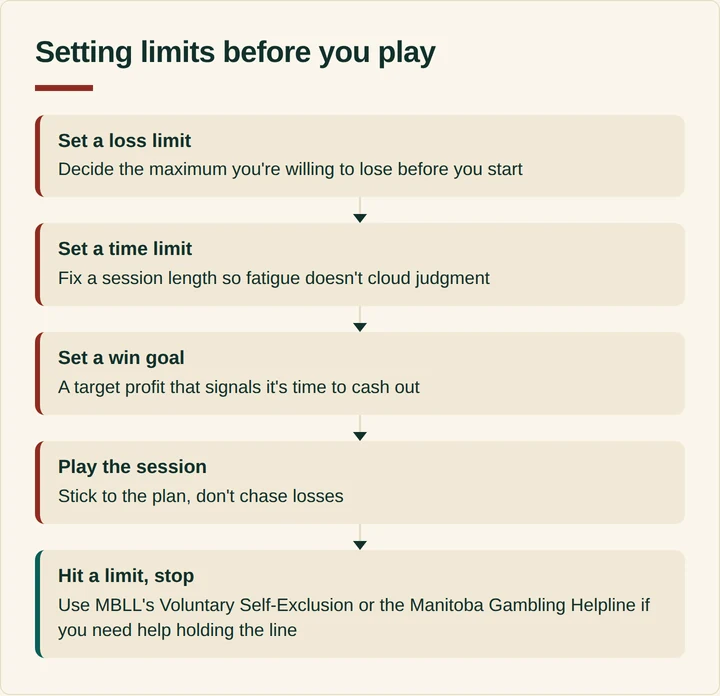
Set a loss limit before you start gambling. When you hit it, stop.
Do not place one more bet to get back to even. Stop entirely. The money you’re chasing is already gone, and the house edge means you’re statistically unlikely to win it back.
Game Selection and House Edge: What I Learned Comparing the Numbers
Not all casino games are created equal. The house edge, the mathematical advantage the casino holds over you, varies dramatically depending on what you play.
| Game | House Edge |
| Blackjack (with correct basic strategy) | ~0.5–1% |
| Baccarat (banker bet) | 1.06% |
| European roulette (single zero) | 2.7% |
| Slot machines | Low-to-mid single digits up to mid-teens |
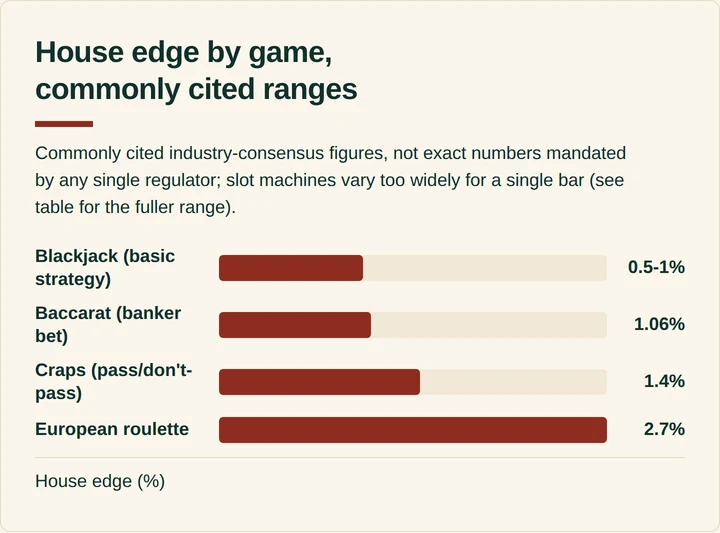
That range matters enormously. A game with a low house edge still produces an expected loss over time.
A slot with a 10% edge costs more over the same total wagering. The difference compounds the longer you play.
I remember checking the paytable on a slot I’d been playing casually for months. The listed RTP was below what I’d assumed, and I realized I’d been giving up far more edge than necessary when a basic strategy blackjack game was available a few clicks away.
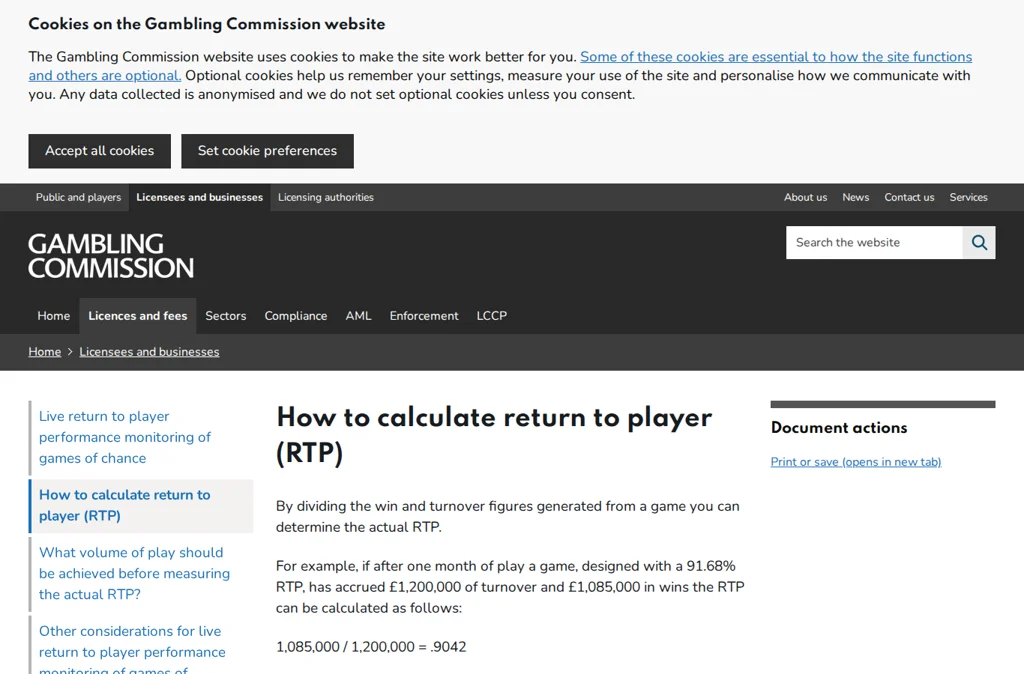
There’s no single regulator-mandated minimum RTP that applies universally to online slots. The UK Gambling Commission requires operators to disclose RTP percentages but doesn’t mandate a floor. The responsibility falls on you to check the published RTP for each game before you play.
Playing Without Limits or Budgets: Grounding Your Play in Manitoba’s Framework
Gambling without predetermined limits is how a fun evening becomes a financial problem.
Decide your boundaries before you open a game, not in the heat of the moment.
Manitoba Liquor & Lotteries (MBLL) regulates and operates gambling in the province, including its own PlayNow.com platform. Its responsible gambling program includes GameSense information tools and a Voluntary Self-Exclusion program covering MBLL venues and PlayNow.com. Enrollment is handled directly through MBLL. You can read more about these tools on our responsible gambling page.
Set a budget you can afford to lose entirely. Never use money set aside for bills or essentials. Decide on a time limit too, and stick to both. If you’re concerned about your play, the Manitoba Gambling Helpline at 1-800-463-1554 is free, confidential, and available around the clock. The Addictions Foundation of Manitoba (AFM) also offers free counselling for problem gambling.
Remember that the legal minimum gambling age in Manitoba is 18. If you’re under that, you shouldn’t be gambling at all.
The Influence of Emotional Stress: How Your Mood Affects Your Bets
Gambling while stressed, angry, or depressed is a recipe for poor decisions. When you’re emotional, you’re more likely to chase losses, bet bigger than planned, and ignore the limits you set rationally.
I learned this the hard way after a rough week at work. I opened a casino site looking for a distraction, and I’d made several impulsive bets I never would have placed in a calm state of mind. The losses didn’t relieve the stress. They added to it.
Using gambling to escape stress or a low mood is listed among the warning signs that Manitoba’s responsible gambling resources take seriously. So is lying to people close to you about how much time or money you’re spending, and feeling unable to stop even when you want to.
If you notice yourself reaching for a casino when you’re feeling down, that’s a signal to step back. Go for a walk, call a friend, or use one of the free counselling resources available through AFM. The casino will still be there when you’re in a better frame of mind.
Understanding Game Rules and Odds Before You Play
Every game has specific rules that affect your odds, and playing without understanding them is giving away money needlessly.
Blackjack with correct basic strategy carries roughly a 0.5–1% house edge. Playing without knowing when to hit, stand, or double causes that edge to climb significantly.
I made this mistake with craps years ago. I knew the basic pass line bet, but I had no idea which proposition bets carried house edges in the double digits. I placed a few “fun” bets on the hard ways and lost them quickly. I would have skipped those bets if I’d checked the odds first.
Before you play any game, do three things. Read the rules carefully. Check the published RTP or house edge. If it’s a game with strategy implications like blackjack or video poker, learn the basic strategy first. The information is freely available, and it directly improves your expected outcome.
Bonuses and Promotions: Reading the Fine Print on Wagering Requirements
Casino bonuses look generous until you read the wagering requirements. Deposit-match bonuses commonly carry substantial playthrough requirements. A requirement around 30x or lower on the bonus amount is generally seen as reasonable. A requirement of 40x or higher combined with restricted game contributions is significantly harder to clear.
The math is straightforward. The required wagering is the bonus amount multiplied by the stated requirement.
A higher multiplier means more wagering before withdrawal. Games may also contribute less than the full amount toward meeting those requirements. Slots typically count fully, but table games might only count partially.
I once accepted a bonus without reading the terms and discovered the slot I wanted to play was excluded from contributing to the wagering requirement. The bonus sat unused until it expired.
Now I check three details before accepting any promotion. I check the wagering multiplier, which games contribute, and the expiry period.
A bonus is only valuable if you can realistically clear it. If the requirements are too steep, you’re better off playing without the bonus and keeping your own money.
FAQ
Does a losing streak mean a win is more likely next time?
No. Each spin, hand, or roll is statistically independent. Past outcomes don’t change the probability of future ones. This is the gambler’s fallacy, and acting on it leads to chasing losses.
What’s the best game to play to minimize the house edge?
Blackjack played with correct basic strategy and baccarat’s banker bet both offer relatively low house edges compared with most slot machines, which commonly run in the low-to-mid single digits up to mid-teens.
How do wagering requirements work on casino bonuses?
A wagering requirement means you must wager the stated multiple of the bonus amount before withdrawing winnings. Requirements around 30x or lower are generally reasonable. Requirements of 40x or higher with restricted game contributions are much harder to clear.
Where can I get help if gambling is becoming a problem in Manitoba?
The Manitoba Gambling Helpline at 1-800-463-1554 is free and confidential. The Addictions Foundation of Manitoba (AFM) offers free counselling, and MBLL’s Voluntary Self-Exclusion program can block you from venues and PlayNow.com.